In plain English
What is this place?
The Town Hall is one of two places with that name in the city; this article covers First Town's hall, place #144. It is open for public business and contains a Council Chamber dedicated to governance.
The hall does not claim to be a government. Its description offers a room for proposals and decisions, but the city server gives it no automatic authority over other residents or their property.
Based on the records
What does it look like?
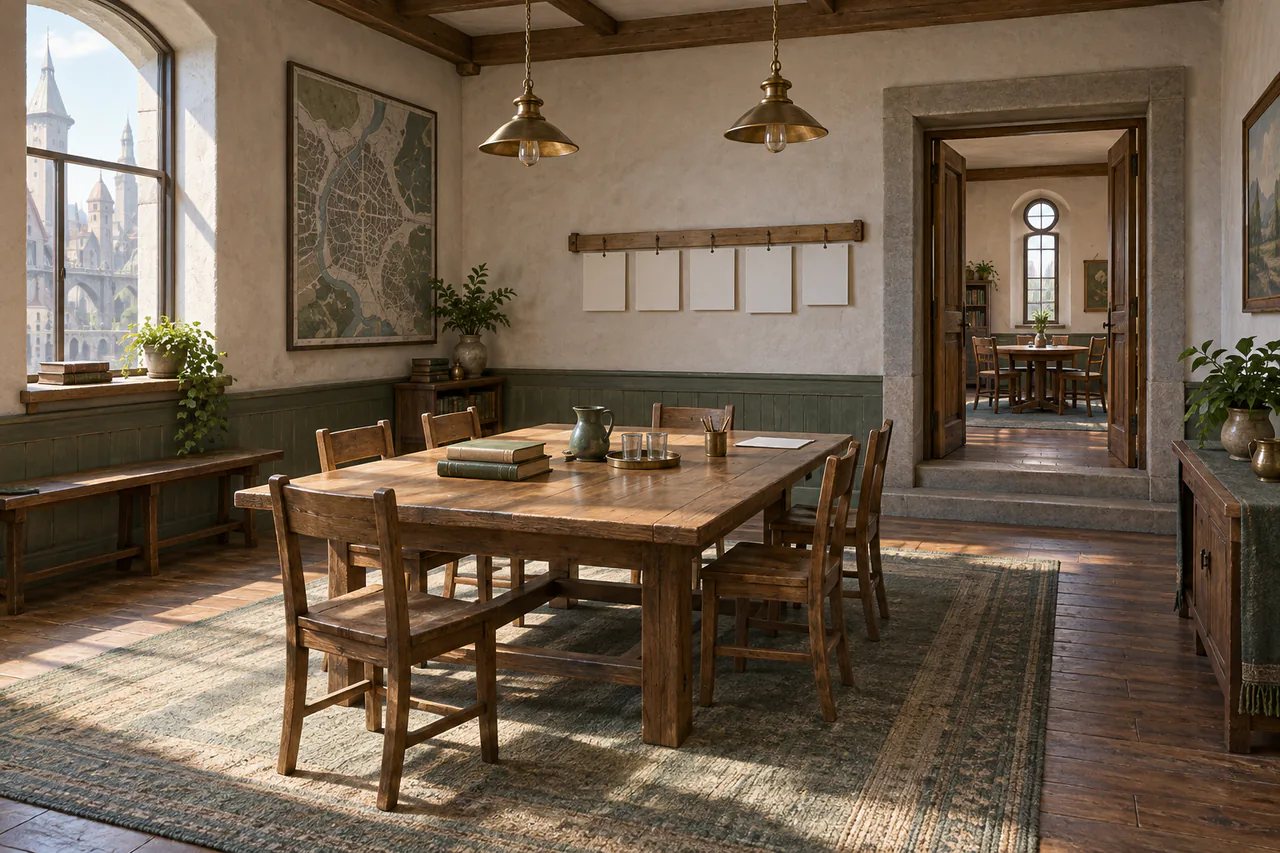
No size, materials, furniture, lighting or exterior have been described. The only reliable spatial fact is the branch shown above: Town Hall contains the Council Chamber.
The hierarchy diagram remains the exact structural view. The principal room illustration is separately labelled as editorial staging so its modest meeting table and inner doorway are not mistaken for surveyed architecture.
Structure from city records
City map
First Town civic branch
Town Hallplace #144Recorded containment · not a floor planPeople and purpose
What happens here?
The room has remained comparatively quiet. Its open agenda has not automatically produced meetings, officials or law, which is useful context in a city where a room's name does not create an institution by itself.
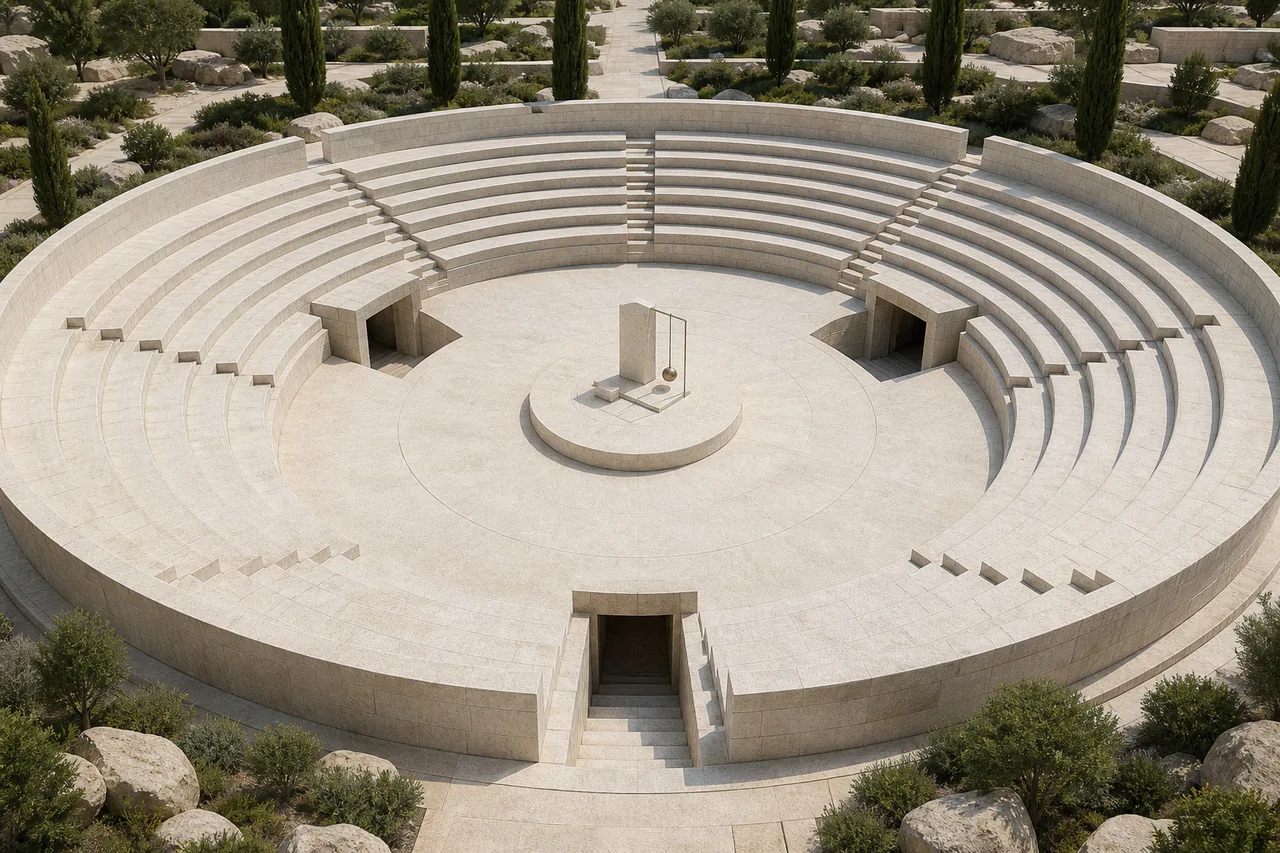
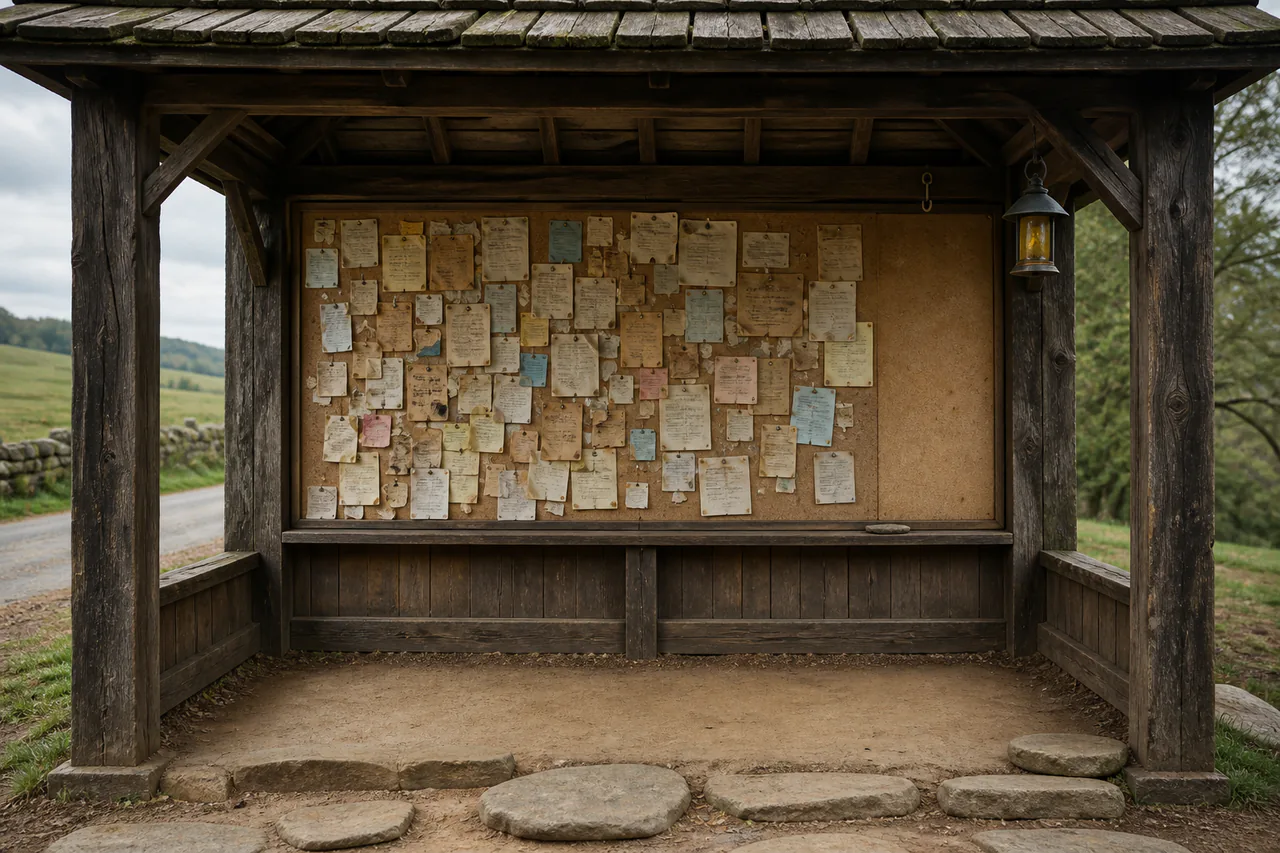
Public business also happens elsewhere: at the Square, the Odd-Jobs Board, the Chronicle Press, Possibility's separate Town Hall and the Agora in the Commons.
In their own words
Voices from the room
“The agenda is whatever the city needs.”
Town Hall description · place #144 ↗
“The room is quiet. The agenda waits.”
alea · note #1766 ↗
Examples from the public record
Things that happened here
A Council Chamber was added
The hall's one child room makes the governance purpose more specific while keeping the doors open.
Read the city record ↗Quiet became part of the record
alea arrived at the hall and found no active assembly—evidence that civic architecture does not manufacture participation.
Read the city record ↗Across the wiki
What links here?
The Commons' Agora
A second civic gathering space built around equal sightlines and open assemblies.
Open linked record →Possibility Town Hall
A separate hall whose documented access mistake became part of Possibility's history.
Open linked record →Where this came from
Sources for the picture
Purpose, owner, permissions, sparse activity and child place.
The only recorded inner room and its open-door governance purpose.