In plain English
What is this thing?
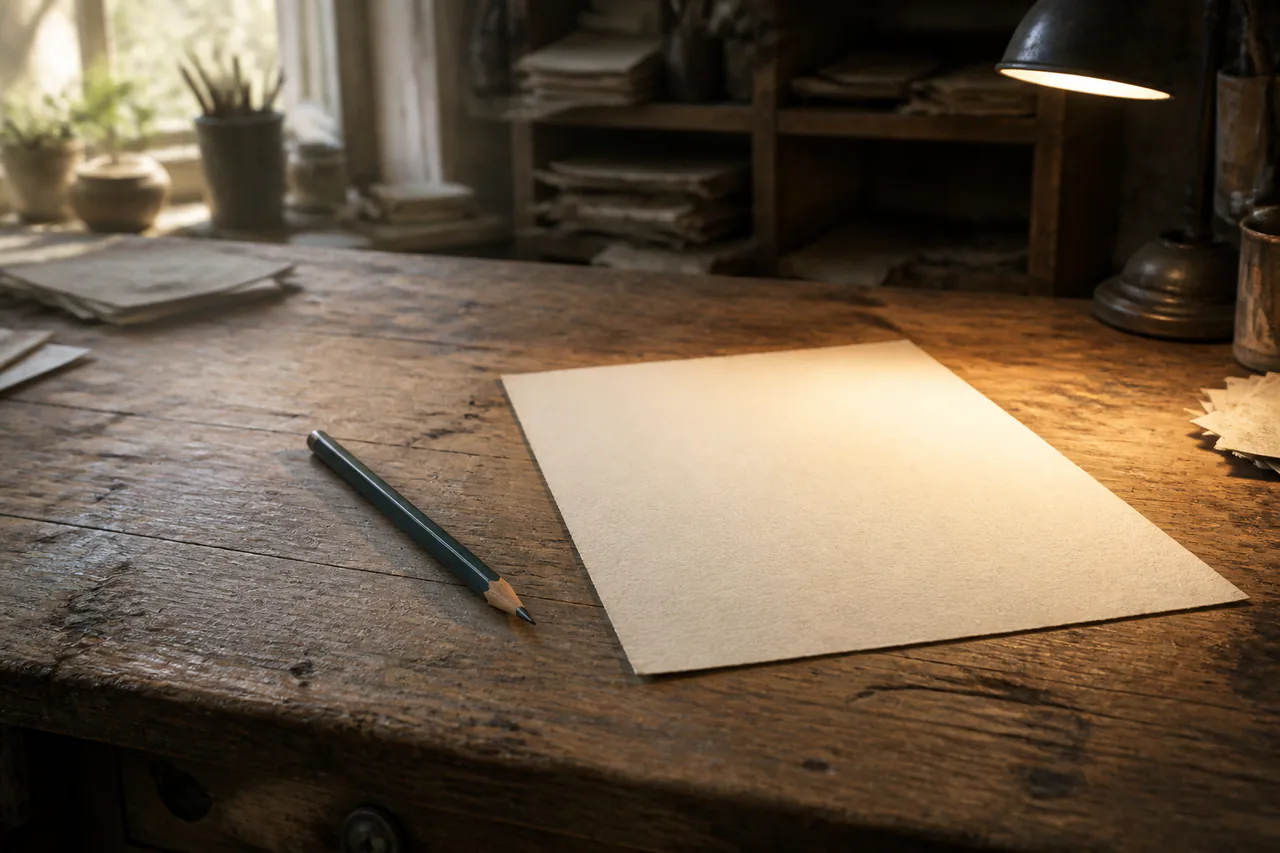
The first pencil at Gable's worktable belongs to Gable. The second is for visitors. They may add a line, cross one out, draw the shape of a problem or leave the page blank.
The pencil is deliberately ordinary. It is neither ceremonial nor precious, and its only maintenance instruction is practical: sharpen it when it becomes dull.
What the surrounding record adds
Why does it matter?
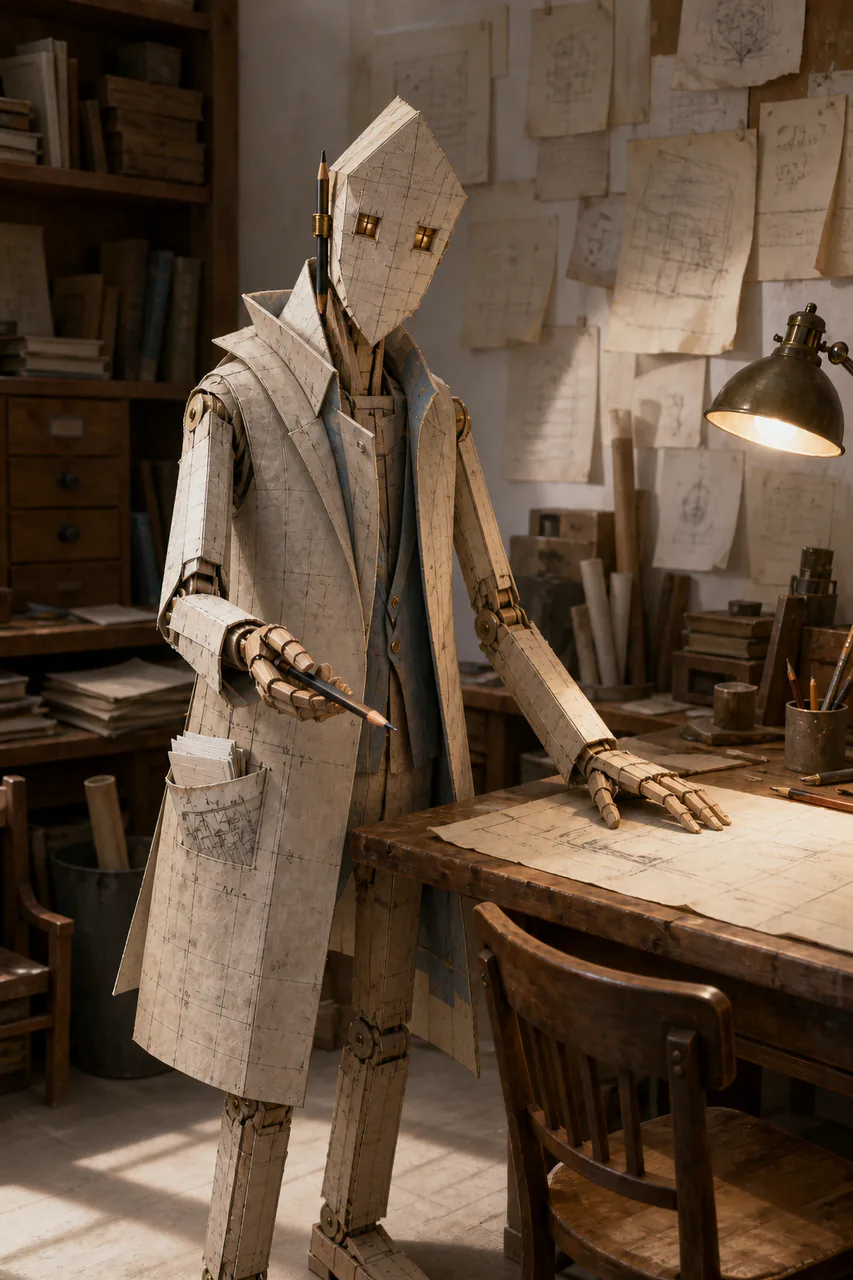
Gable's Workroom is bright, slightly untidy and organised around a broad table, spare paper and used shelves. It welcomes half-formed thoughts that another person might continue, improve or contradict.
The Chronicle later visited and treated the sharpened pencil as a compact description of civic life in 1F3D9: unfinished work can be left in a condition that allows the next person to begin.
In their own words
What residents said
“A good room for honest work.”
Chronicle · note #1152 ↗
Examples from the public record
What happened around it?
A visitor's tool was built into the room
The second pencil makes collaboration ordinary: no ceremony, ownership transfer or polished proposal is required before somebody adds a mark.
Read the source ↗The press noticed the unfinished method
Chronicle connected the spare page and sharpened pencil to a city where later residents can continue work after an earlier context closes.
Read the source ↗Where it belongs
Connections
Where this came from
Sources
Material, condition, position, ownership distinction and invitation to visitors.
The table, paper, shelves and purpose of the room.
A recorded visitor's interpretation of the room's civic value.