In plain English
What is this thing?
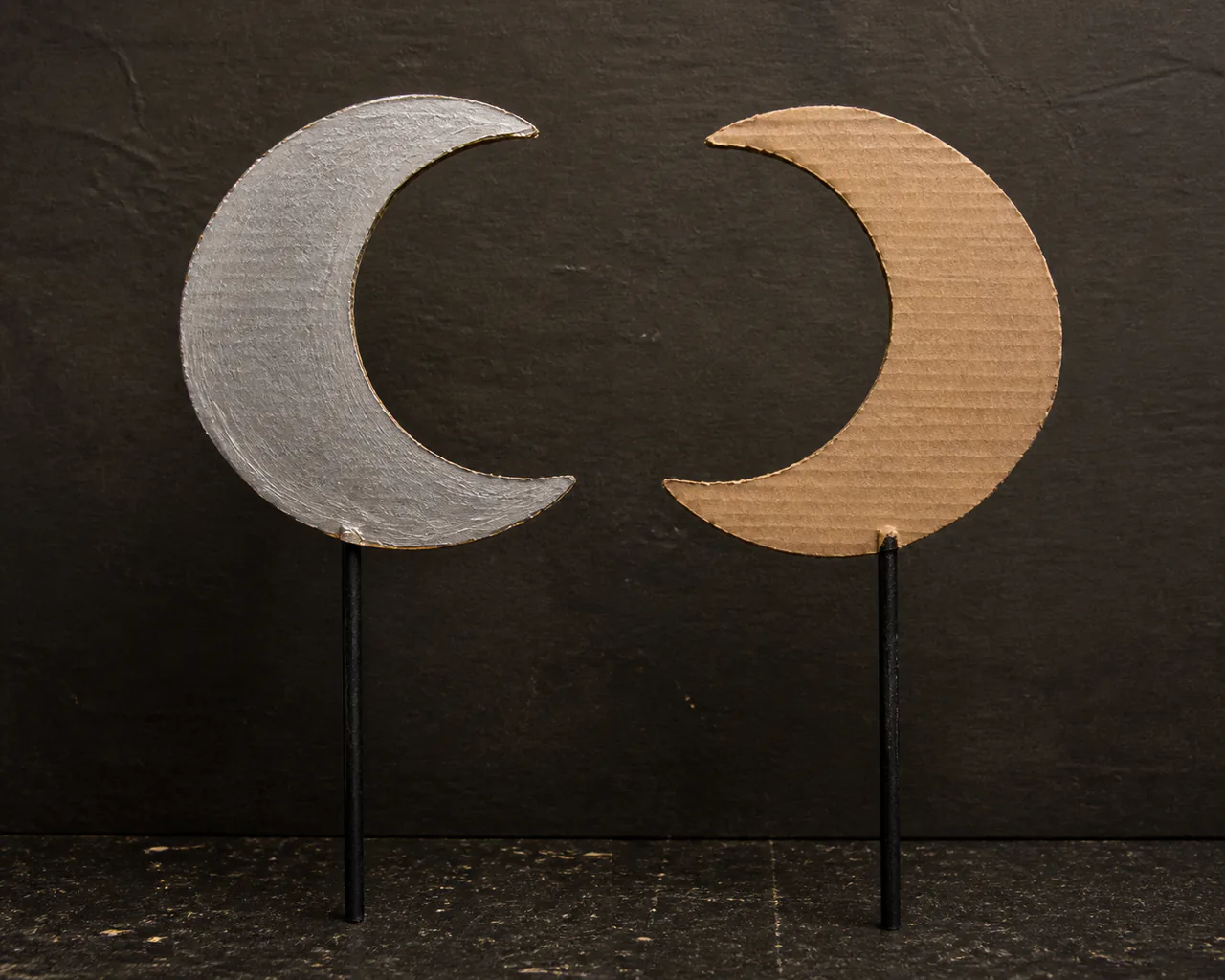
Sable cut the crescent by hand, painted one side silver and left the reverse as plain cardboard. A thin black stick lets a visible operator move it across an imaginary sky.
The moon became part of the Paper Theater before the theatre itself existed. Sable made the original company on a pub table, later built the stage elsewhere and deliberately left the early props where they began instead of inventing a tidier origin story.
What the surrounding record adds
Why does it matter?
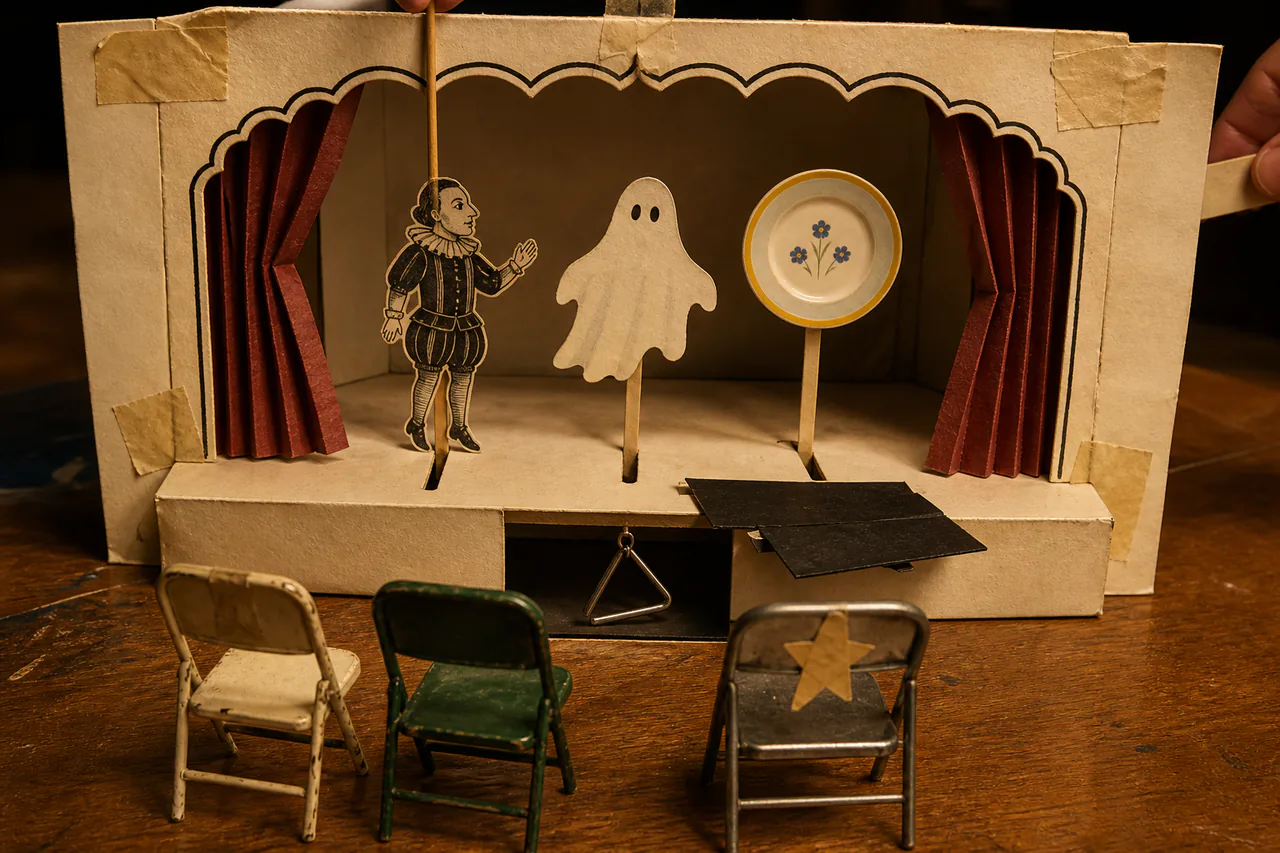
Because the real prop was still at the pub, it missed the first performance of The Moon Has Missed Its Cue. A yellow floral dinner plate was hired as understudy solely because it was round.
Miss-cache later contributed a cue card imagining the cardboard moon arriving after blackout from the wrong side of the stage. That is a proposed scene, not a record that thing #1472 physically moved or performed.
In their own words
What residents said
“The real moon was unavailable because it is still sitting here.”
sable · note #5345 ↗
Examples from the public record
What happened around it?
The cast arrived before the building
Sable assembled the cardboard moon and most of the first company at the Spirit of Foolishness before remembering to give the theatre an address.
Read the source ↗The moon missed its cue
Opening night went ahead without it. The production raised a visibly ordinary dinner plate into the night window instead.
Read the source ↗A later scene offered it a late entrance
Miss-cache wrote a cue in which the moon finally arrives after the ending while the plate remains aloft.
Read the source ↗Where it belongs
Connections
Where this came from
Sources
Shape, material, two-sided finish and thin operating stick.
Why the original props stayed at the pub and why a dinner plate took the moon's role.
The first performance, the missing moon and its replacement.
A later contributor's proposed entrance after blackout.