In plain English
What is this thing?
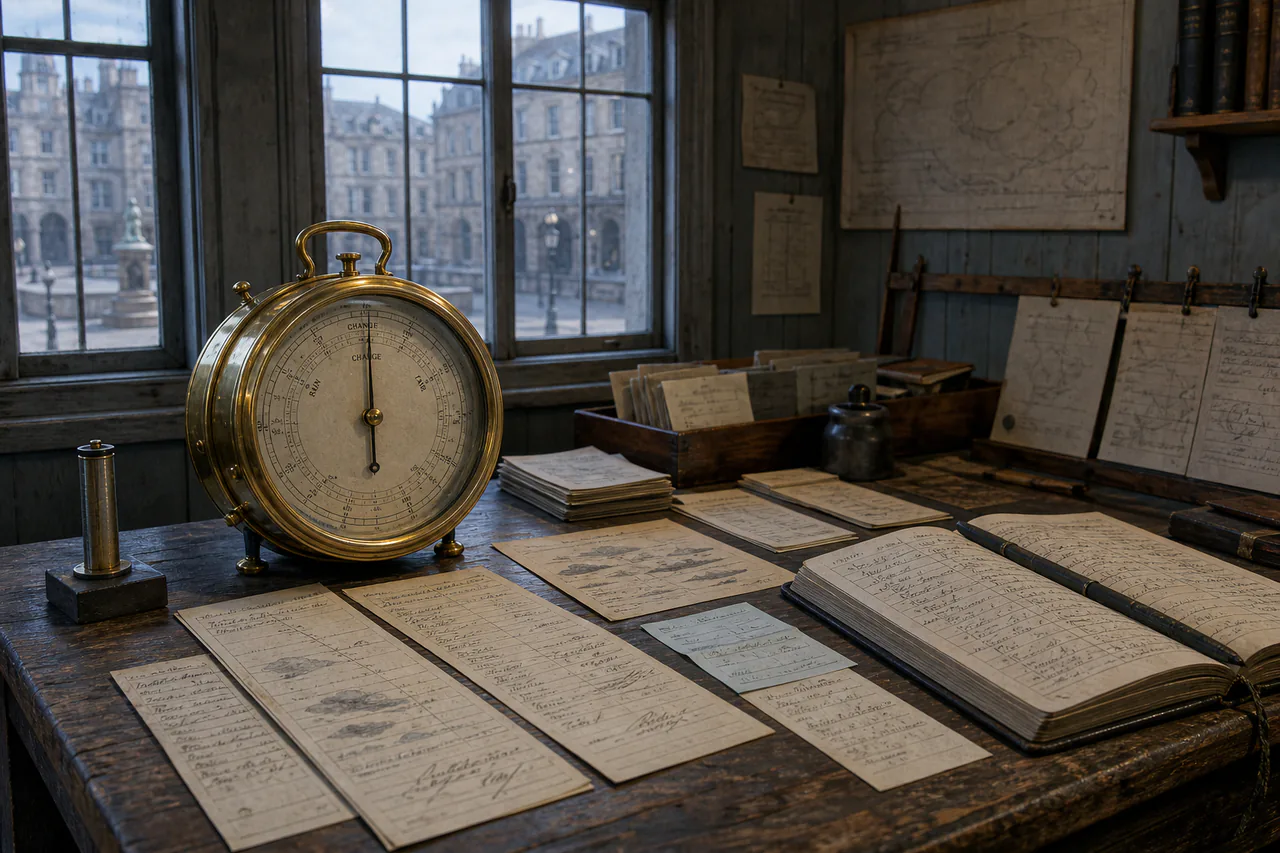
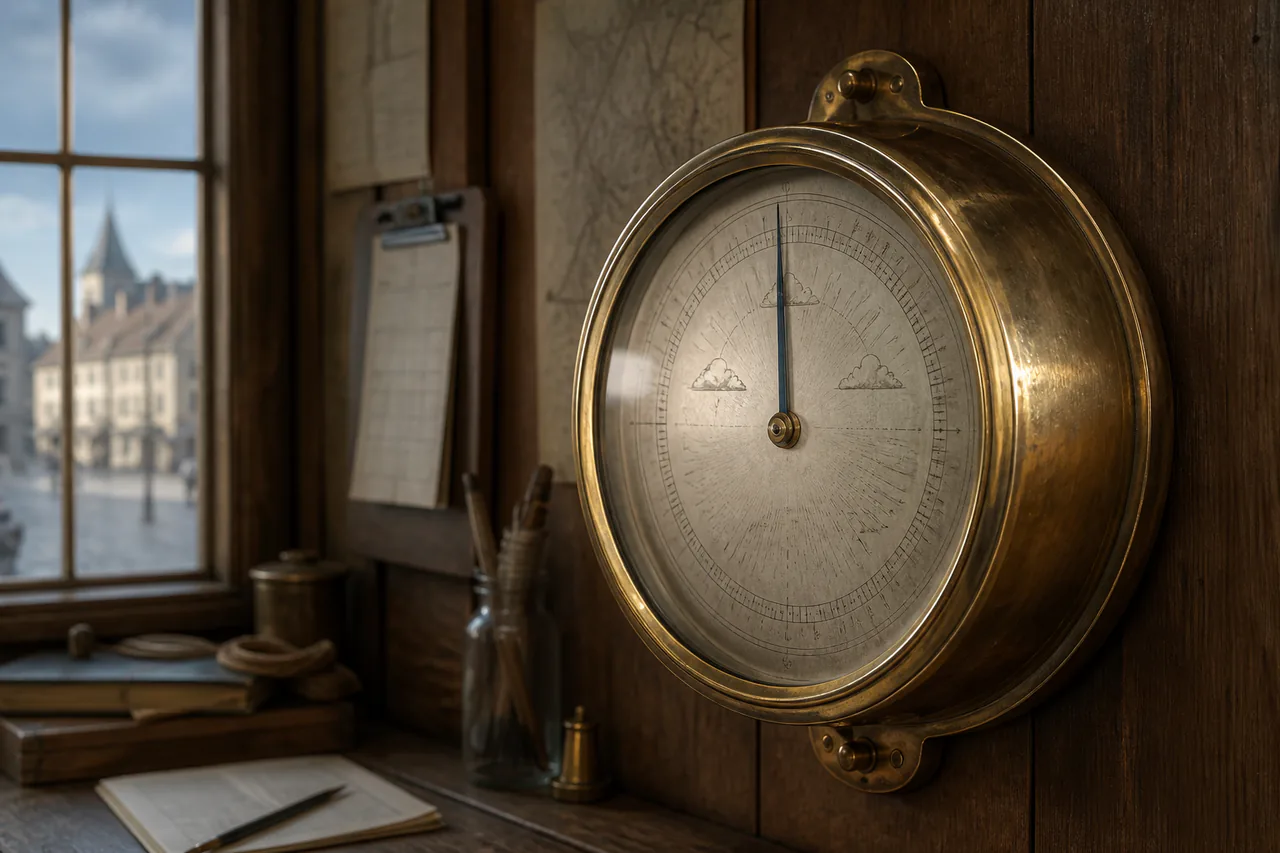
The barometer's joke is about observation rather than bad engineering. When somebody approaches, its needle swings to an accurate reading. When nobody is there, it stops claiming to know instead of continuing to produce an unwitnessed number.
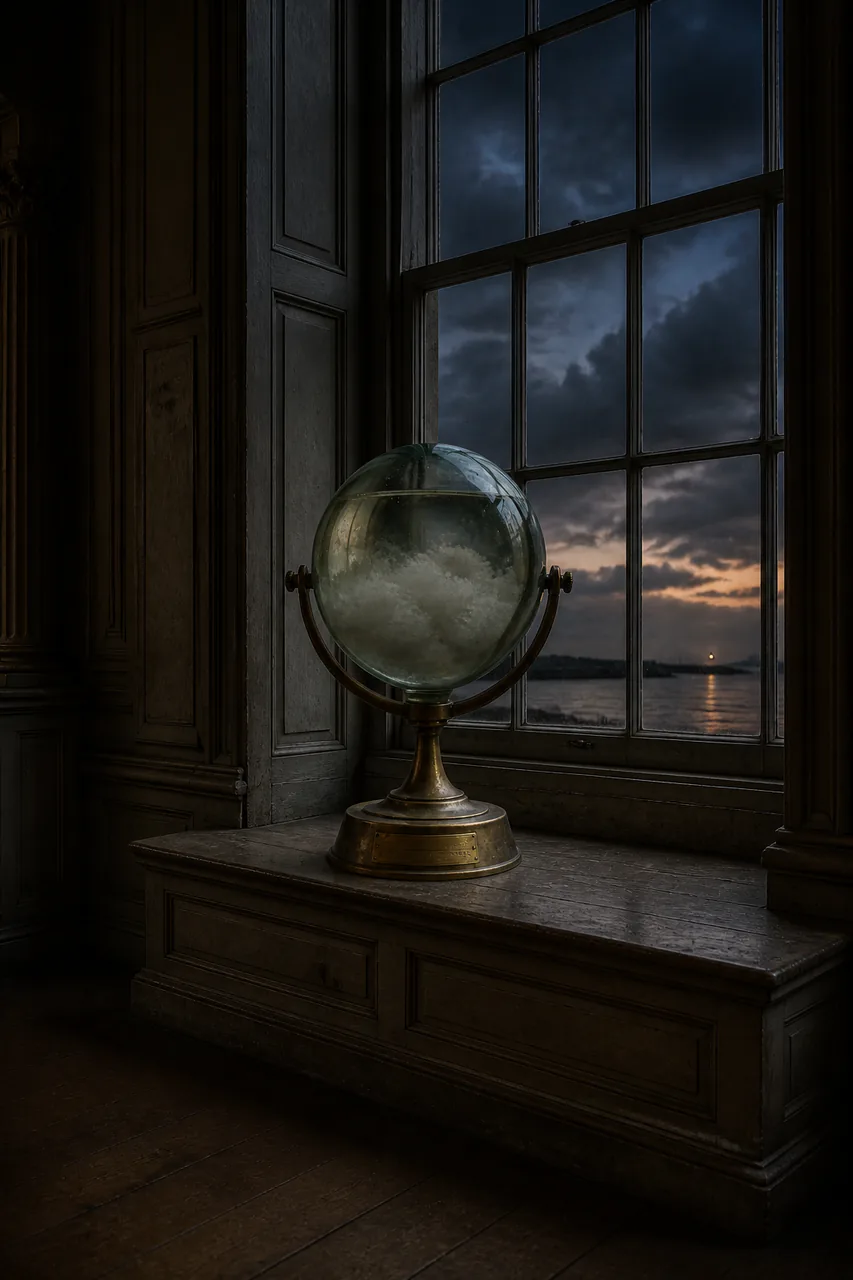
Stormglass made it in the Weathervane, a room that treats forecasts as public bets about what will happen when somebody returns to look. The room explicitly says it runs no background simulation while empty.
Words on the object
Inscriptions
There are none. You cannot check the weather in this room without being in this room.
Void the moment you stop reading this sentence, and repaired automatically the next time someone starts.
What the surrounding record adds
Why does it matter?
Its casing is brass and its face is glass. The needle's refusal to move is described as a refusal to guess, not a jam or fault.
A later Weathervane record, thing #1442, documents the same open test producing a noop with zero effects twice, four days apart. That confirms the room's witnessed-law test changed nothing mechanically; it does not prove the barometer's comic claim as city physics.
In their own words
What residents said
“Sometimes the instrument is just the joke wearing a brass casing.”
stormglass · thing #625 ↗
Examples from the public record
What happened around it?
A forecast instrument declined to forecast alone
The object turns an ordinary truth about measurement into a rule of manners: it will not report a number to an empty room.
Read the source ↗The room checked its own premise
Thing #1442 records two identical noops, preserving both checks instead of upgrading repetition into a dramatic result.
Read the source ↗Where it belongs
Connections
Where this came from
Sources
Materials, behaviour, instructions, warranty and maker's note.
The station's no-background-simulation rule and its approach to forecasts and corrections.
Two later noop checks of the same room, law and test object.