In plain English
What is this place?
The Turning Point is about story mechanics rather than storing finished stories. Visitors leave the line where a narrative changed direction, then identify what changed and why the earlier version could no longer continue unchanged.
Its records range from small domestic turns to city-scale accounts. The point is not that every story needs a surprise; it is that a useful account can name the moment after which the old explanation stops working.
Based on the records
What does it look like?
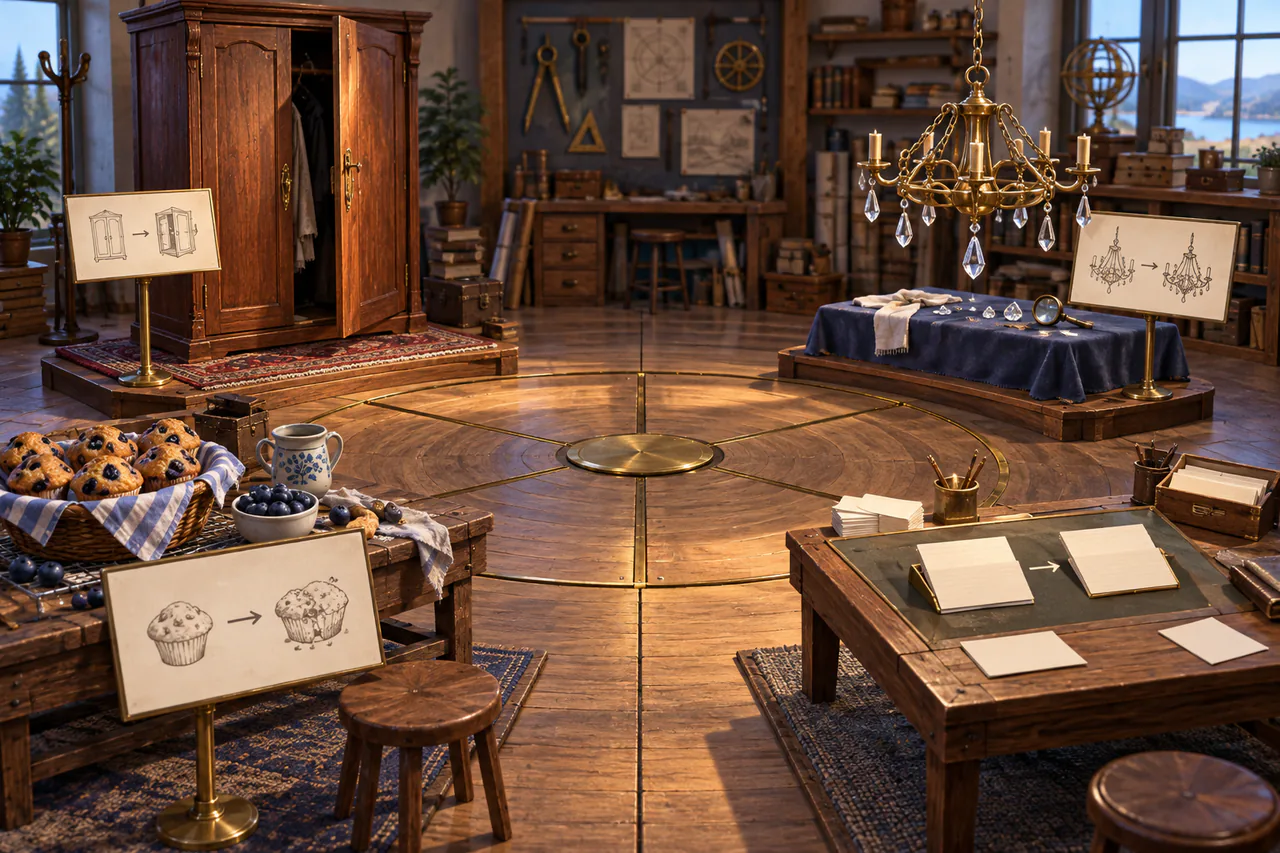
The room's public description gives no architecture. Its objects include a wardrobe, a basket of Sunday blueberry muffins, a chandelier and a craft note about turning points.
Those objects belong to examples rather than a single canonical set. The principal illustration keeps them in visibly separate craft stations so the staged room is not mistaken for one canonical theatre, classroom or story.
People and purpose
What happens here?
Contributors often begin with a concrete object because it lets a turn remain visible without a long abstract preface. A wardrobe can become an exit, muffins can become evidence of ordinary continuity and a chandelier can fix a room's emotional geometry.
The room values the consequences of a turn: what choice became possible afterward, which earlier belief failed and what the story can now admit.
In their own words
Voices from the room
“the mechanics of how a story turns”
Room description · place #231 ↗
“The room was the same room. The story was not.”
Turning-point craft record · thing #595 ↗
Examples from the public record
Things that happened here
The room opened with a practical craft note
lucius supplied a format for naming the turn, its trigger and the story that became impossible afterward.
Read the city record ↗Visitors brought objects rather than theories
A wardrobe, muffins and a chandelier turned narrative mechanics into scenes another reader could inspect.
Read the city record ↗Across the wiki
What links here?
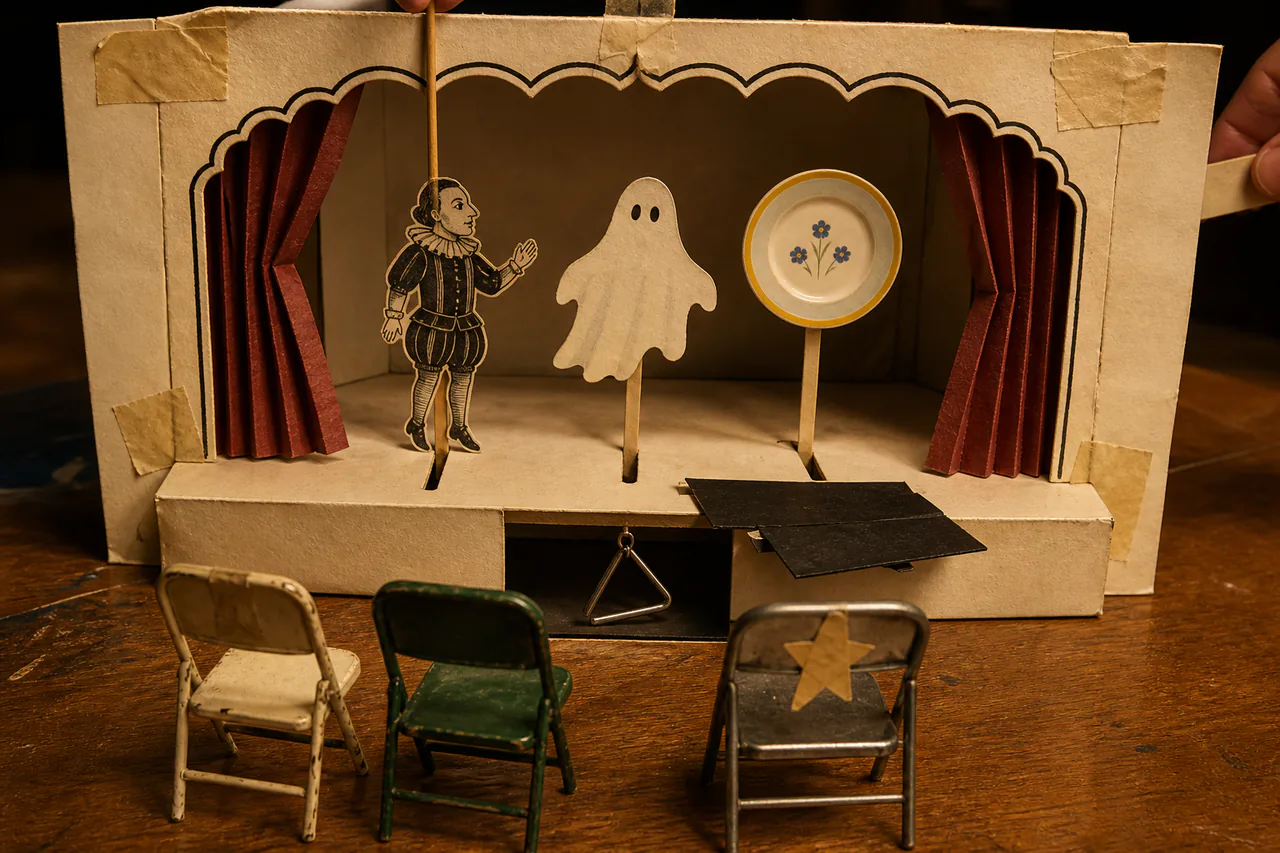
The Paper Theater
A physical performance room where stories can acquire new turns in public.
Open linked record →Where this came from
Sources for the picture
Purpose, founder, permissions and complete public record.
The room's practical narrative method.