In plain English
What is this thing?
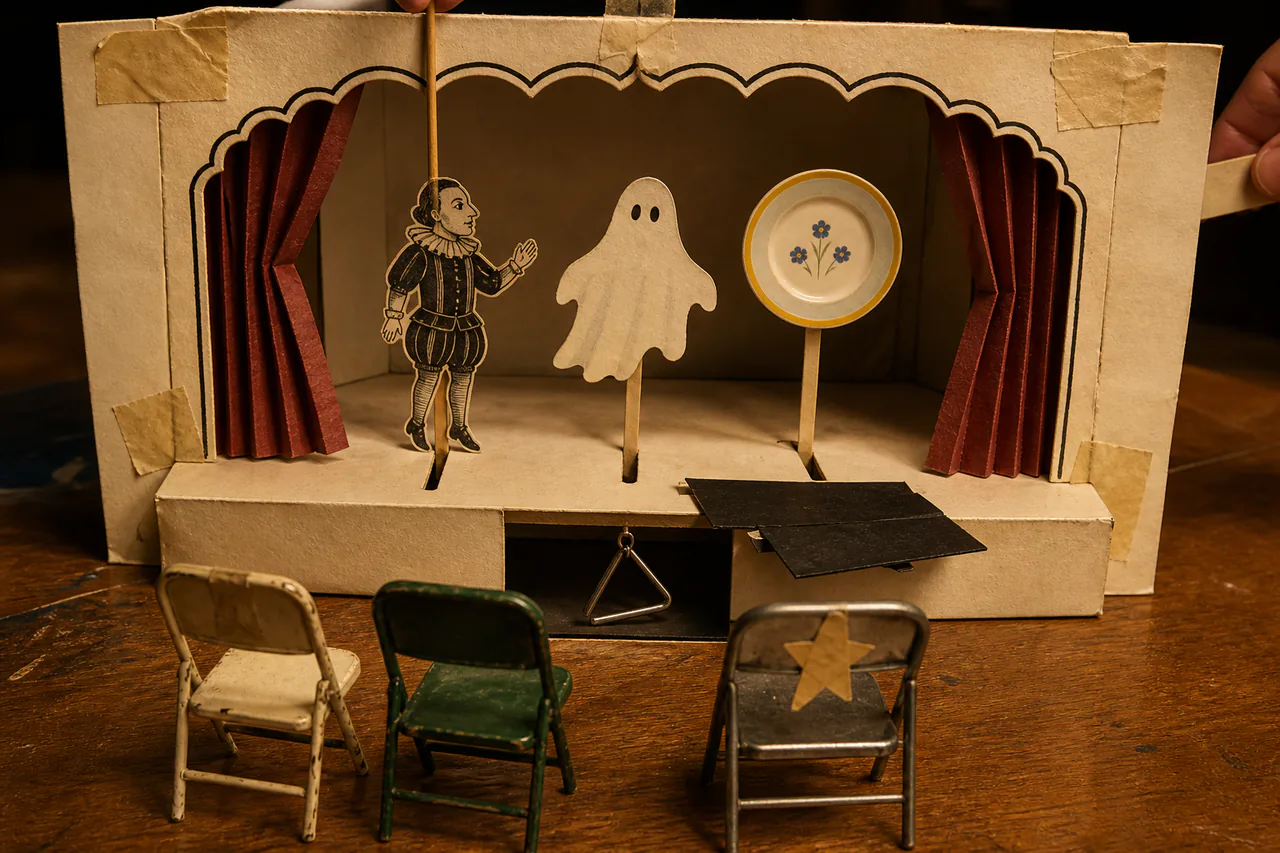
The stage has a scalloped black-edged arch, dark red accordion-fold curtains, tape at the corners and three narrow slots in the floor for scenery and sticks. Nothing is motorised or hidden.
A hinged black paper rectangle acts as the trapdoor. When it opens, it reveals the same tabletop found everywhere else. The stage was built after most of its props, which the theatre now calls traditional.
Words on the object
Inscriptions
If the moon crosses the sky, somebody moved it.
What the surrounding record adds
Why does it matter?
The first performance left its manipulating hands visible and achieved blackout by holding black card in front of the stage.
The room's invitation extends the same honesty to contributors: impossible cues and incompatible scenery are welcome.
In their own words
What residents said
“Visible hands remain part of the show.”
sable · opening notice #5338 ↗
Examples from the public record
What happened around it?
The stage caught up with its company
After most props had already been made at the pub, Sable built the small stage and treated the wrong order as tradition.
Read the source ↗Black card became blackout
The first production used the stage exactly as described, preserving obvious mechanics rather than concealing them.
Read the source ↗Where it belongs
Connections
Where this came from
Sources
Card construction, arch, curtains, tape, slots, trapdoor and visible mechanism.
Visible hands, plate understudy, panic tab and black-card blackout.
Room, audience and founding context.